
Every year, large quantities of clothing and textiles fall out of use, even though many of their materials still have potential. As the fashion industry looks for ways to reduce waste and conserve resources, upcycling fashion offers an opportunity to transform existing textiles into new products.
From repurposed denim accessories to redesigned garments, upcycling extends the useful life of materials while creating opportunities for more sustainable production.
What Is Upcycling in Fashion?
Upcycling is the process of transforming used garments, fabrics, or other recovered materials into new products of equal or greater value. Rather than discarding textiles, designers use their existing characteristics to create something with a new purpose.
The main difference between upcycling and recycling lies in how materials are processed. Recycling generally involves breaking materials down into raw inputs, often requiring chemical treatments and more energy-intensive processes. Upcycling, on the other hand, preserves and repurposes existing fabrics or components without breaking them down into raw materials.
How Does the Upcycling Process Work?
The process of upcycling clothes involves several stages, from recovering materials to producing finished garments or accessories.
First, used clothing and textiles are collected and sorted according to their fabric type, condition, color, and suitability for reuse. This evaluation helps determine which materials can support a particular design.
Next, designers develop products around the available textiles. Existing materials may influence the patterns, dimensions, and appearance of the finished piece.
The selected fabrics are then prepared for production. Depending on their condition and intended use, this may involve cleaning, repairing, cutting, or removing unsuitable sections.
Finally, the recovered textiles are sewn into new products and inspected for quality.
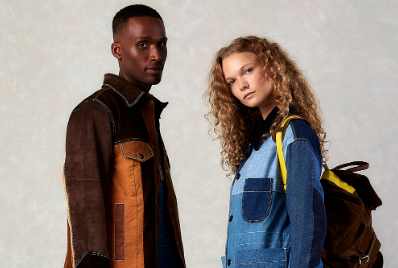
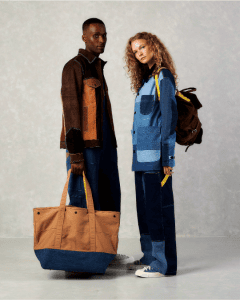
Among the many upcycling ideas available, transforming old jeans into bags is a practical example. Denim panels can be recovered, cut, and assembled into accessories, giving the original fabric another use.
Why Is Upcycling Important for Sustainable Fashion?
Upcycling supports more sustainable fashion by extending the life of existing textiles and reducing the need for newly produced materials.
By reusing fabrics that have already been manufactured, brands can help conserve natural resources and reduce textile waste. These practices contribute to a circular economy, where materials remain in use for longer instead of following a conventional production-and-disposal cycle.
Upcycling also creates commercial opportunities. Recovered fabrics can become distinctive products, limited-edition collections, or accessories with unique design characteristics.
For fashion brands, these products can appeal to consumers interested in sustainability, originality, and the stories behind their purchases.
However, commercial success depends on factors such as material availability, processing costs, production efficiency, and customer demand.
Bank & Vogue’s Role in Upcycling and Circular Fashion
Bank & Vogue supports circular fashion through the recovery, sorting, and wholesale supply of secondhand clothing and textiles. These materials can be directed toward resale, reuse, and new manufacturing applications.
Its sister company, Beyond Remade, formerly BVH Services, specializes in transforming recovered textiles into new fashion products. Beyond Remade provides services ranging from material sorting and component manufacturing to garment production, repair, and remanufacturing.
Its collaborations with global fashion brands demonstrate how recovered materials can be incorporated into new collections. For Coach, Beyond Remade manufactured components from post-consumer denim sourced by Bank & Vogue, which were used to produce handbags such as the Tabby Shoulder Bag, Cargo Tote, and Rogue Patchwork Denim bag. The collaboration also expanded to other materials, including corduroy.
For Converse, Beyond Remade transformed recovered garments into components for the Renew Chuck 70 collection, using fabrics such as denim, canvas, and flannel. The partnership has contributed to the production of more than one million pairs of shoes across multiple releases.
Together, Bank & Vogue and Beyond Remade connect recovered textile supplies with fashion manufacturing, helping brands develop new products from existing materials while keeping textiles in circulation for longer.