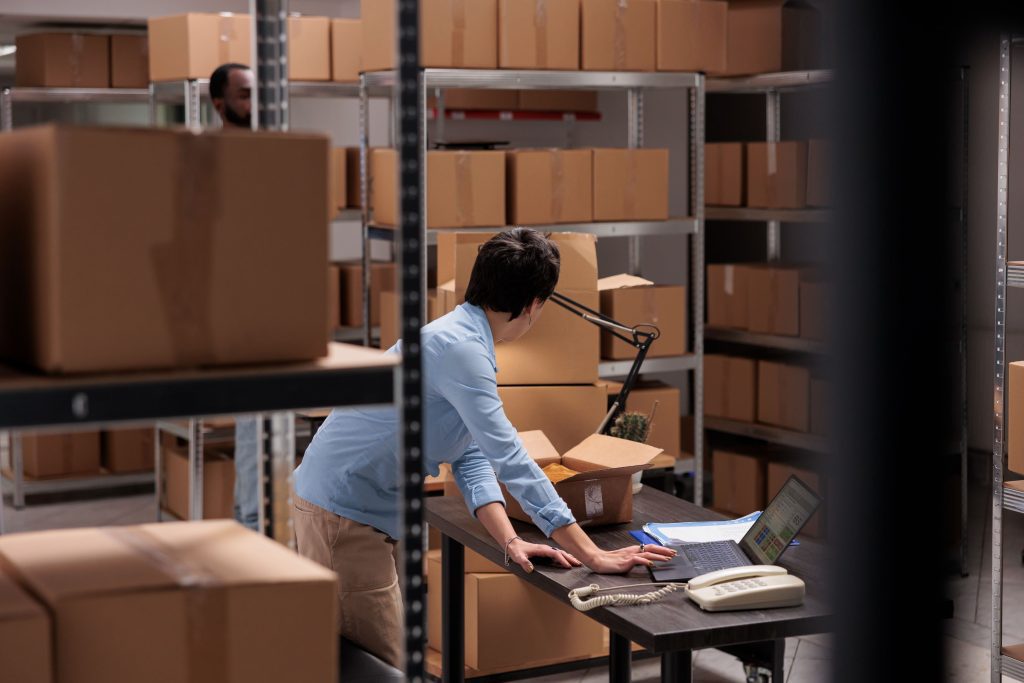


Retailers regularly manage products that no longer move through their primary sales channels. Customer returns, seasonal merchandise and overstock inventory can take up valuable storage space while tying up money that the business has already invested.
Reverse logistics provides a way to manage some of this merchandise by moving it into alternative resale and distribution channels. For retailers with sufficient volume, selling qualifying products to specialized buyers such as Bank & Vogue can be one option.
What Is Reverse Logistics and How Does It Work for Retailers?
For retailers, reverse logistics can be as simple as finding a new destination for inventory they can no longer sell through their usual channels. This may include customer returns, seasonal products, discontinued merchandise or items that were simply ordered in larger quantities than the store could sell. Instead of keeping this inventory in storage or discarding it, retailers can sell it to specialized companies that purchase these goods and later resell them in wholesale markets.
For apparel and other consumer goods, the process can provide another destination for products that still have value. Rather than leaving store returns or unsold goods in storage, retailers can work with buyers that purchase merchandise for redistribution into secondary markets.
This creates an additional path for usable products once a retailer has determined that selling them through its regular channels is no longer practical.
Store Returns, Overstock Inventory and Other Products That Can Be Resold
Retailers can accumulate excess inventory for many reasons. Seasonal demand may change, a product can be discontinued or a store may simply have purchased more merchandise than it was able to sell. Store returns are another source of inventory: products purchased by customers and later returned to the retailer for reasons such as fit, preference or a change of mind.
These goods do not necessarily have the same characteristics. Their condition, categories and quantities can vary considerably, which makes it important for businesses to understand what they have available before approaching a potential buyer.
Creating an overview of the products, their condition and available volume can make it easier to determine which merchandise may be suitable for resale.
How to Sell Excess Inventory to Specialized Inventory Buyers
Businesses researching how to sell excess inventory can consider specialized inventory buyers when the quantities involved make a wholesale transaction possible.
Bank & Vogue purchases qualifying merchandise from retailers in the United States and Canada. Before evaluating an opportunity, the seller should be prepared to provide basic information about the inventory, including the product categories, approximate quantity, condition and location.
Minimum Pallet Requirements When Selling Surplus Inventory
Selling surplus inventory to a wholesale buyer is different from finding a destination for a few boxes or individual products. Bank & Vogue works with a minimum volume of approximately 20 to 30 pallets to fit a 40 ft HC container.
The inventory can include mixed product categories. For example, a qualifying load could combine 10 pallets of baby clothing with 10 pallets of baby toys rather than requiring the entire shipment to contain one type of merchandise.
Minimum quantities are important because wholesale transactions involve consolidating merchandise, handling pallets and coordinating transportation. They also help determine whether moving the goods through this type of reverse logistics operation is viable.
For retailers wondering where to sell excess inventory, evaluating the available volume before contacting a buyer can help establish whether this wholesale route is appropriate.
"*" indicates required fieldsNew Contact Form - Sept 2025
Turning Excess Inventory Into a New Supply Chain Opportunity
Products that no longer fit a retailer’s primary sales strategy do not automatically lose all their value. Through reverse logistics, businesses can find alternative destinations for qualifying merchandise and potentially recover part of the investment tied up in products they can no longer sell through their regular channels.
Resale also allows those products to reach other buyers, potentially at more affordable prices, while keeping usable merchandise in circulation instead of discarding it.
For retailers in the United States and Canada with sufficient volumes of returns or excess goods, working with a specialized buyer can therefore become part of a broader inventory management strategy: one that considers both the economic value that remains in the merchandise and the opportunity to give those products another destination.