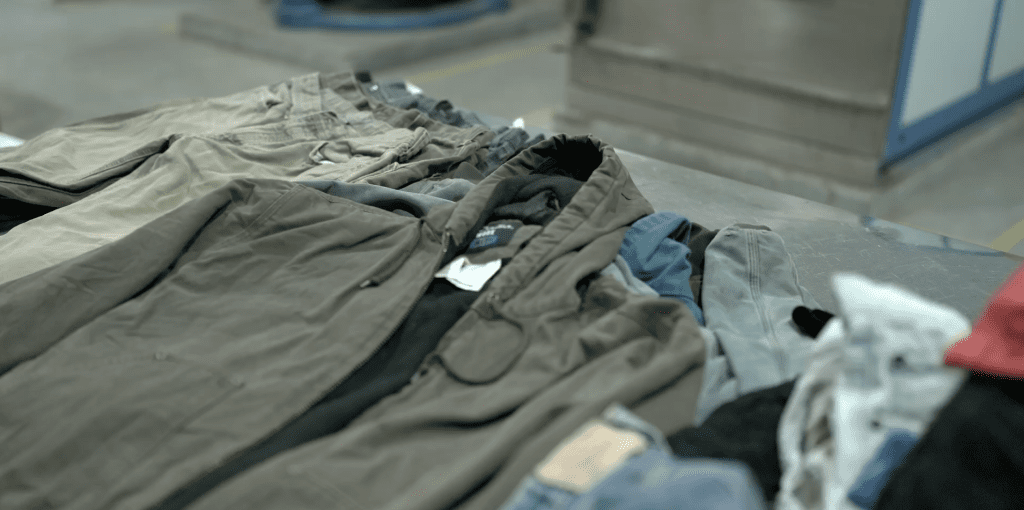


As global concern over textile waste intensifies, two solutions are often discussed as if they are interchangeable: reuse and recycling.
While both play critical roles in diverting textiles from landfill, they are not environmentally equivalent — and understanding the distinction is essential for building a truly circular system.
So which strategy diverts more from landfills? And which delivers the greatest environmental benefit?
The answer lies in the waste hierarchy, lifecycle research, and the realities of global infrastructure.
Understanding the Textile Waste Hierarchy
Globally recognized waste frameworks prioritize actions in the following order:
- Reduce
- Reuse
- Recycle
- Recover energy
- Dispose (landfill)
This hierarchy reflects resource efficiency. Maintaining a product in its original form typically requires fewer inputs than breaking it down and manufacturing something new.
In textiles — one of the most resource-intensive industries in the world — this principle becomes especially important.
Reuse: Extending Garment Life
Reuse keeps clothing in its original function. This includes:
- Domestic secondhand retail
- International resale markets
- Vintage and thrift channels
- Credential clothing streams
When a garment is worn again by another consumer, its lifespan increases. If that reuse displaces the purchase of a new garment, lifecycle assessments show meaningful reductions in environmental impact, including:
- Avoided raw material extraction
- Reduced water consumption
- Lower energy use
- Avoided emissions from new production
The environmental benefit depends on replacement rate — meaning the extent to which reused clothing replaces new purchases. When replacement occurs, reuse typically provides the highest environmental return per garment.
Importantly, reuse operates at scale today through established global collection, grading, and resale systems.
Industrial Wiping: Continued Utility
Garments that are no longer suitable for resale may enter industrial wiping streams.
Textiles are processed into wiping cloths used in automotive, manufacturing, and maintenance industries. This pathway:
- Diverts material from landfill
- Extends functional life
- Can reduce demand for disposable alternatives
While the textile no longer functions as apparel, it continues serving a practical purpose before eventual disposal.
This represents material reuse at a lower value tier.
Downcycling: Material Recovery
Downcycling mechanically transforms textiles into new applications such as:
- Insulation
- Carpet padding
- Furniture stuffing
- Industrial fibers
This process diverts waste and can offset virgin material use. However:
- Fibers are shortened during mechanical shredding
- Material quality declines
- The output is rarely recyclable again
Downcycling plays a role in diversion but represents a permanent reduction in material value.
Fiber-to-Fiber Recycling: Growing but Limited
Fiber-to-fiber recycling aims to convert used textiles back into new textile fibers.
Emerging technologies include:
- Mechanical cotton recycling
- Chemical recycling of polyester
- Regeneration processes for cellulose-based fibers
This sector holds strong long-term potential. However, current constraints include:
- Limited processing capacity
- High infrastructure costs
- Technical challenges with blended fabrics
- Energy intensity depending on process
Today, fiber-to-fiber recycling represents a smaller share of total textile recovery compared to global reuse markets — though it is expanding.
What Diverts More — Today?
From a landfill diversion perspective:
- Reuse diverts garments immediately and at global scale.
- Industrial wiping and downcycling extend material life.
- Recycling technologies continue to grow but remain capacity-limited.
From an environmental efficiency perspective:
- Reuse generally provides the highest benefit when it replaces new production.
- Recycling delivers environmental gains compared to landfill and virgin production.
- A layered system is necessary for textiles that are not reusable.
The most accurate conclusion is not that recycling is ineffective — but that reuse should be prioritized wherever garments remain wearable.
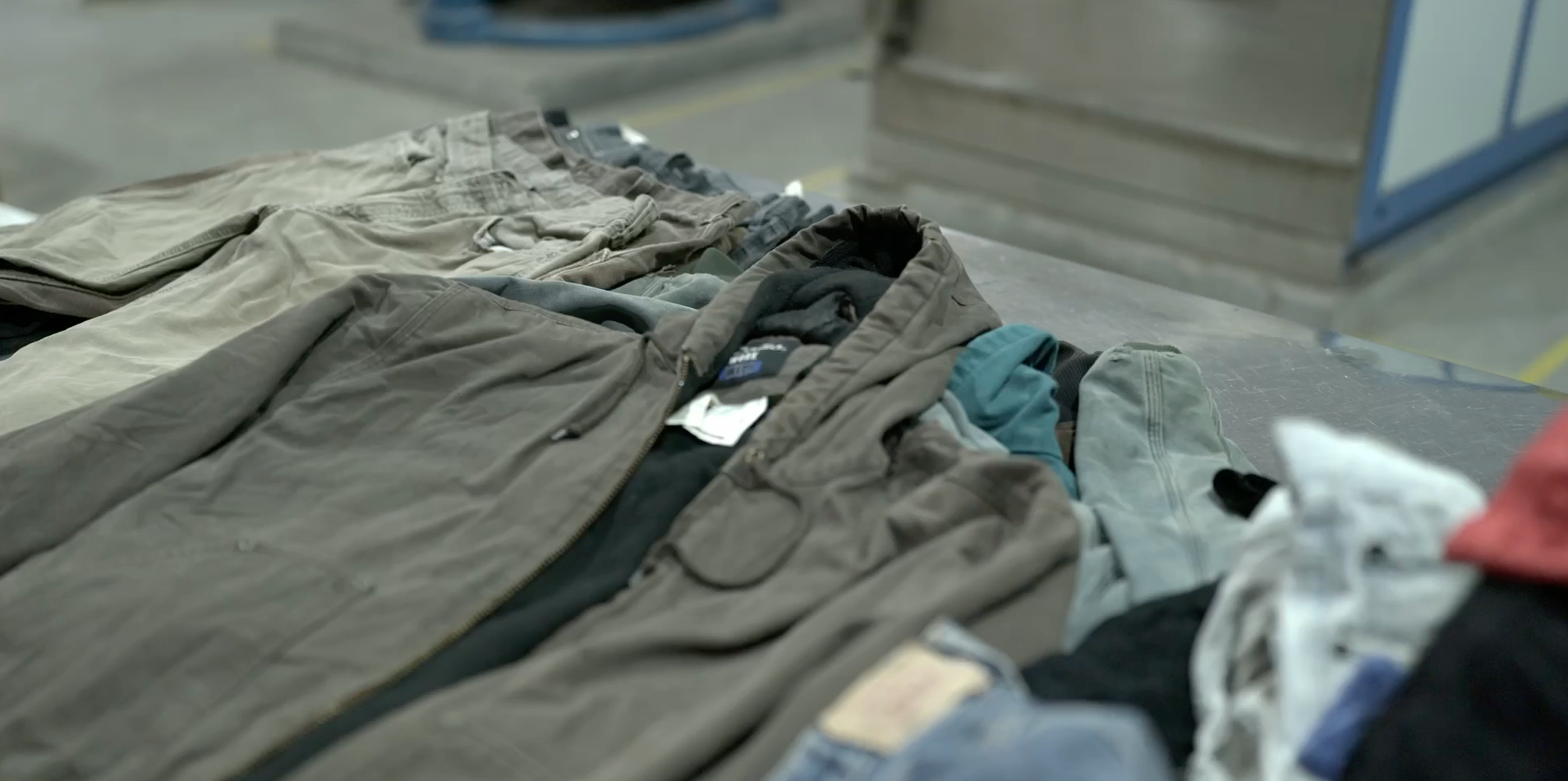
Recycling is essential for materials that cannot be reused. But breaking down a garment that could have been worn again forfeits its highest-value environmental opportunity.
Avoiding a False Debate
Framing reuse and recycling as competing solutions oversimplifies the issue.
A resilient circular textile system depends on:
- Efficient collection systems
- Advanced grading and sorting expertise
- Strong domestic and international resale markets
- Industrial recovery pathways
- Continued investment in recycling innovation
- Supportive regulatory frameworks
Each layer supports the next.
The effectiveness of recycling, in fact, depends on proper sorting — ensuring reusable garments are not prematurely destroyed.
The Path Forward: Building Circular Infrastructure That Works
As textile waste volumes continue to rise globally, the conversation must move beyond concepts and toward infrastructure.
Circularity is not achieved through a single innovation. It requires:
- Scalable reuse networks
- Responsible global trade partnerships
- Industrial recovery channels
- Investment in emerging recycling technologies
- Data transparency and operational discipline

Before a textile can be recycled, it must first be evaluated. Before it can be downcycled, its reuse potential must be assessed.
Directing each garment into its highest-value pathway is what maximizes landfill diversion and environmental impact.
This is where large-scale reuse infrastructure plays a critical role.
By prioritizing wearable garments for secondhand markets and responsibly channeling non-reusable textiles into wiping, downcycling, or recycling streams, the industry ensures materials are not prematurely landfilled or unnecessarily destroyed.
The future of circular textiles will absolutely include advanced recycling at scale. But today, the most resource-efficient strategy remains clear:
Extend the life of what already exists.
Because circularity does not begin with breaking garments down —
It begins with keeping them in use.