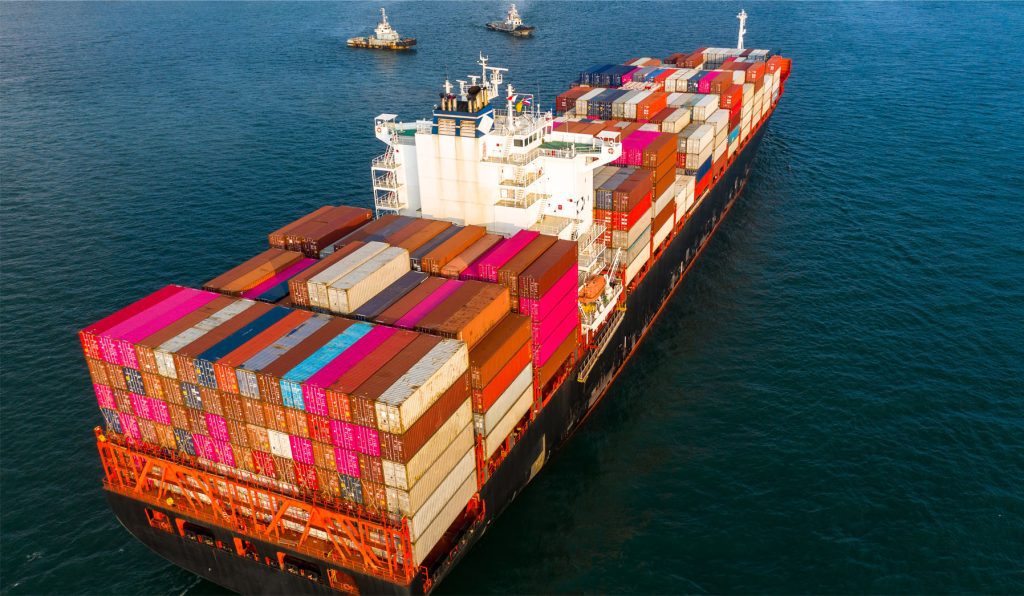


How shipping costs, carbon policies and logistics disruptions affect exporters and buyers.
International trade in used clothing depends on more than the availability of merchandise and demand in destination markets. Shipping routes, freight rates, port operations and regulatory requirements all influence how goods move between countries.
For exporters and wholesale buyers, understanding these factors is an important part of evaluating international shipments. Changes in maritime transport can affect delivery schedules, transportation costs and the operational decisions involved in moving merchandise across borders.
As the global shipping industry responds to geopolitical disruptions and new environmental requirements, international logistics are becoming an increasingly important consideration for businesses across the secondhand supply chain.
Freight Rates and the Cost of International Shipping
Freight rates are influenced by several factors, including cargo demand, vessel capacity, operating costs, shipping routes and port conditions. Geopolitical developments can also affect the availability and cost of transportation.
UN Trade and Development (UNCTAD), in its Review of Maritime Transport 2025, documented how disruptions in the Red Sea affected international container shipping. Vessels rerouted around the Cape of Good Hope, extending voyage times, reducing effective shipping capacity and increasing operating costs.
The report also highlighted continued volatility in container, dry bulk and tanker freight markets during 2024 and the first half of 2025. Container spot and charter rates approached levels seen during the COVID-19 disruptions in mid-2024 before moderating, while uncertainty continued into 2025.
These developments demonstrate how events affecting one major shipping corridor can have implications for transportation networks elsewhere.
For used clothing exporters and wholesale buyers, freight costs are an important part of evaluating a shipment. The purchase price of merchandise needs to be considered alongside transportation, handling and other applicable charges when calculating the overall cost of bringing goods into a destination market.
Fuel, Energy and Maritime Transport
Fuel is one of the operating requirements of maritime shipping, and vessel energy consumption is an important consideration for shipping companies. Fuel type, vessel efficiency, voyage distance and operating conditions all influence the energy required to transport cargo.
The maritime sector is also undergoing a transition toward lower-emission energy sources and technologies.
In 2023, the International Maritime Organization (IMO) adopted its revised Strategy on Reduction of Greenhouse Gas Emissions from Ships. The strategy establishes an ambition to reach net-zero greenhouse gas emissions from international shipping by or around 2050, with interim targets for reducing emissions and increasing the uptake of zero- or near-zero-emission technologies and fuels.
This transition involves investment in vessel efficiency, alternative fuels and supporting infrastructure. The pace and cost of adopting these technologies will differ across shipping companies and vessel types.
For businesses involved in international used clothing trade, these developments are relevant because changes in maritime operations and energy requirements form part of the broader environment in which international freight services operate.
Carbon Regulations Are Changing Maritime Shipping
Environmental regulations are increasingly influencing how shipping companies monitor emissions and manage vessel operations. Two important developments are the European Union Emissions Trading System (EU ETS) and the FuelEU Maritime Regulation.
The EU Emissions Trading System (EU ETS)
Since January 2024, maritime transport has been included in the EU ETS. The system requires shipping companies to surrender emissions allowances for covered greenhouse gas emissions from ships within its scope.
The requirements apply to cargo and passenger ships of 5,000 gross tonnage or above, regardless of flag, when they fall within the system’s geographical scope.
The phase-in schedule is:
- 2024: 40% of covered emissions.
- 2025: 70% of covered emissions.
- 2026 onward: 100% of covered emissions.
The system covers emissions from voyages between EU ports and emissions at berth in EU ports. For voyages between an EU port and a non-EU port, 50% of the emissions are covered.
FuelEU Maritime
The FuelEU Maritime Regulation began applying on January 1, 2025. It establishes progressively stricter limits on the greenhouse gas intensity of energy used by commercial ships above 5,000 gross tonnage calling at EU ports, regardless of their flag.
The regulation aims to encourage the use of renewable and low-carbon fuels and cleaner energy technologies. Its targets begin with a 2% reduction in greenhouse gas intensity in 2025, compared with the 2020 reference level, and increase progressively toward an 80% reduction by 2050.
These regulations apply to shipping companies and qualifying vessels, not directly to individual shipments of used clothing. Nevertheless, they are important developments for businesses that depend on maritime transport, as environmental compliance is becoming an established part of international shipping operations.
Shipping Disruptions and Supply Chain Planning
Changes in shipping routes and port operations can affect transit times, vessel availability and delivery schedules.
UNCTAD’s 2025 review provides a clear example. By May 2025, vessel tonnage passing through the Suez Canal remained approximately 70% below 2023 levels, reflecting the continued impact of Red Sea disruptions.
Rerouting vessels around the Cape of Good Hope increased shipping distances and contributed to delays and higher operating costs. Port congestion and changes in vessel schedules added further pressure to maritime transport networks.
For businesses importing and exporting used clothing, these developments highlight the importance of considering transportation schedules when planning inventory and purchasing decisions.
Delays can affect when merchandise becomes available, warehouse planning and the coordination of subsequent sales. Although businesses cannot control international shipping disruptions, they can take them into account when organizing shipments.
Some practical considerations include:
- Confirming freight costs: Review current quotations and clarify which transportation and additional charges are included.
- Allowing flexibility in schedules: Consider possible changes in transit times when planning inventory and customer commitments.
- Reviewing shipping options: Compare available routes, service conditions and estimated delivery times.
- Maintaining communication: Stay in contact with freight forwarders, carriers and logistics partners throughout the shipping process.
- Monitoring regulatory developments: Follow applicable maritime and destination-market requirements that may affect transportation and imports.
International Trade and the Secondhand Clothing Market
Logistics are only one part of the international used clothing trade. Import requirements, product quality, market demand and the ability to distinguish reusable clothing from textile waste also influence how merchandise moves between countries.
A 2026 joint study by the United Nations Economic Commission for Europe (UNECE) and the Economic Commission for Latin America and the Caribbean (ECLAC), titled Making Trade Work for Circularity, examines how trade-related technical regulations could improve the sustainability of international secondhand clothing trade.
The study highlights the role international trade can play in matching the supply of reusable clothing with demand in different markets. It also discusses challenges involving product quality, the separation of reusable merchandise from waste and the environmental and enforcement responsibilities of importing countries.
This perspective is important because the movement of secondhand clothing involves more than transportation. It also depends on appropriate trade requirements and the ability of businesses to serve markets where reusable merchandise is needed.
Looking Ahead
International maritime transport is adapting to geopolitical uncertainty, changing trade routes and environmental regulations. These developments are influencing how shipping companies operate and how businesses plan international shipments.
For the secondhand clothing industry, reliable logistics remain essential to connecting suppliers with buyers and moving merchandise into markets where it can be resold and reused.
At Bank & Vogue, we work with businesses across the wholesale secondhand market. Understanding international trade conditions and the practical considerations involved in moving merchandise across borders is an important part of the industry we operate in.
Interested in exploring wholesale secondhand merchandise opportunities? Connect with our team to learn more.
New Contact Form - Sept 2025
"*" indicates required fields