

In the global secondhand clothing market, credential clothing is one of the most important — and misunderstood — product categories. For experienced buyers, it represents both risk and opportunity, offering the potential for strong margins when sourced and processed correctly.
Understanding the economics behind credential clothing helps wholesalers, graders, and resellers make smarter purchasing decisions and build more profitable operations.
What Is Credential Clothing?
Credential clothing refers to unsorted, untouched secondhand clothing collected directly from donation sources such as donation bins, charities, or collection drives. These garments remain in their original donated condition and have not been graded, sorted, or picked through before being sold in bulk.
Because the clothing is untouched, credential loads often contain a wide mix of items, including:
- Men’s, women’s, and children’s apparel
- Shoes and accessories
- Seasonal garments
- Occasionally brand-new items with tags
This “first-touch” supply is valuable because buyers receive inventory before any high-value pieces are removed, giving them the opportunity to extract the most value through their own sorting process.
The Risk vs. Reward Equation
Buying credential clothing is often described as a high-potential but variable investment.
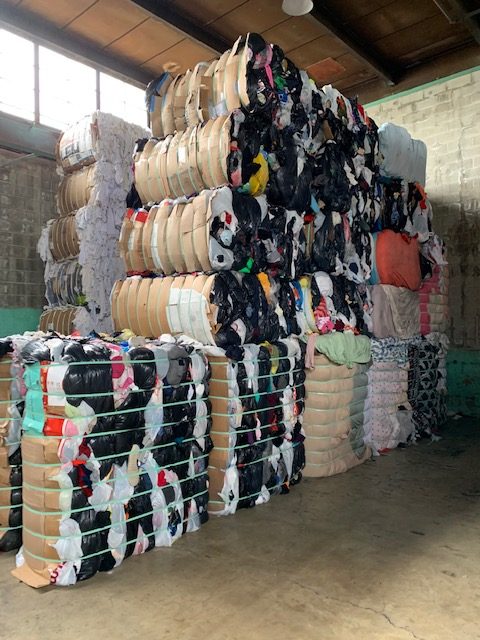
Unlike pre-sorted goods, buyers cannot see the contents before purchasing. Bales are typically compressed and sealed, meaning the quality and resale value can only be determined after opening and sorting them.
Potential Rewards
When the mix is strong, credential loads can deliver:
- High-quality garments suitable for resale
- Vintage or branded items
- Pieces in excellent condition or even new
These high-value items can significantly increase profitability. In many resale markets, top-quality selections from a bale generate a large share of revenue, while mid-quality pieces provide steady sales volume.
Potential Risks
However, the variability also means buyers may encounter:
- Low-value or heavily worn items
- Non-clothing materials mixed in donations
- Unsellable garments requiring recycling
This uncertainty makes credential buying partly dependent on experience, sorting expertise, and market knowledge.
Margin Potential in Credential Clothing
For many wholesalers and graders, credential clothing offers the highest margin potential in the secondhand supply chain.
Why?
Because buyers purchase the product before value extraction occurs.
Once the load arrives, the buyer sorts items into categories such as:
- Grade A / Cream: high-quality pieces for retail resale
- Grade B: wearable items for lower-priced markets
- Grade C: repairable or clearance goods
- Recycling materials: textiles for industrial uses
Each category enters a different resale channel, allowing businesses to maximize value from a single load.
In many secondhand supply chains, the flow begins with unsorted credential clothing (“ropa cruda”), which is then graded and redistributed through wholesalers, vendors, and retail shops.
This layered value extraction is what makes credential clothing economically attractive.
The Role of Grading and Sorting
Sorting is the key step that transforms credential clothing from a raw product into profitable inventory.
After a load is received, resellers typically perform a detailed sorting process, evaluating each garment based on:
- Condition
- Brand value
- Fabric quality
- Seasonality
- Market demand
Items are separated into quality grades. Research on secondhand clothing markets shows that higher-grade garments are suitable for direct resale, while lower grades may require repair or be sold at reduced prices.
Effective grading determines whether a credential load becomes a profitable investment or a loss.
Best Practices for Buyers
Because credential clothing involves uncertainty, experienced buyers follow several best practices.
1. Work With Reliable Suppliers
The integrity of the supply chain matters. True credential clothing should come directly from donation streams without prior sorting or picking, preserving the full value mix.
2. Understand Market Demand
Different markets demand different products. For example:
- Tropical markets prefer lightweight clothing
- Vintage retailers look for unique pieces
- Export buyers may prioritize durability and affordability
Aligning purchases with your target market helps improve sell-through rates.
3. Invest in Skilled Sorting
The profitability of credential clothing depends heavily on sorting expertise. Efficient graders can quickly identify high-value items and channel products into the right resale categories.
4. Diversify Sales Channels
Successful operators typically sell different grades across multiple channels:
- Vintage shops
- Secondhand retail stores
- Market vendors
- Textile recycling operations
This diversified approach allows businesses to capture value from every part of the load.
Why Credential Clothing Matters in the Circular Economy
Beyond profitability, credential clothing plays a key role in extending the life of garments.
When donations exceed what thrift stores can sell locally, they are baled and redistributed through wholesale channels, allowing them to be reused, repaired, or recycled instead of being discarded.
This global reuse system supports:
- Affordable clothing access worldwide
- Job creation in sorting and resale sectors
- Reduced demand for new textile production
For buyers, credential clothing is not just a commodity — it is the entry point into the circular textile economy.
Credential clothing sits at the beginning of the secondhand supply chain, where value has not yet been extracted. For buyers willing to manage the uncertainty, it offers significant opportunities to build profitable resale operations.
Success depends on understanding the economics behind the product: balancing risk, mastering grading, and aligning inventory with market demand.
For experienced resellers and wholesalers, credential clothing isn’t just a purchase — it’s a strategic investment.