

Introduction: A Defining Year for Secondhand
In 2025, the used clothing industry continued its transition from a peripheral sustainability solution to a strategic pillar of global fashion systems. Policy action, evolving trade dynamics, and sustained resale growth all pointed in one direction: circularity is no longer optional.
This year-in-review examines the most important developments shaping the sector — from regulation and international trade to market behavior and infrastructure.
1. Policy Momentum: Circular Economy Moves from Vision to Enforcement
European Union: From Strategy to Implementation
The EU remained a global leader in circular economy regulation in 2025. Building on earlier frameworks such as the EU Strategy for Sustainable and Circular Textiles, member states advanced implementation measures focused on:
- Extended Producer Responsibility (EPR) for textiles
- Improved collection, sorting, and reuse infrastructure
- Increased transparency across textile supply chains
For the used clothing industry, these measures reinforced the role of professional reuse and recycling operators as essential partners in compliance.
United States: State-Level Action Drives Change
While the US lacks a unified federal textile policy, 2025 saw continued momentum at the state level:
- Textile-related EPR discussions expanded
- Waste diversion and reuse targets gained traction
- Resale and recommerce were increasingly recognized as waste reduction tools
This patchwork approach continued to challenge operators — but also created opportunities for experienced organizations with scalable reuse systems.
Africa & LATAM: Balancing Trade, Waste, and Opportunity
In both Africa and Latin America, 2025 policy conversations centered on managing used clothing imports responsibly rather than eliminating them.
Key themes included:
- Calls for better quality controls and traceability
- Recognition of the role secondhand plays in local economies and affordability
- Increased dialogue between governments, importers, and industry groups
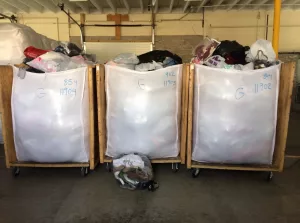
Rather than blanket bans, the year reflected a gradual shift toward regulated participation in global secondhand trade.
2. Global Trade Patterns: Adaptation Over Disruption
Despite ongoing geopolitical and economic pressures, global used clothing trade in 2025 demonstrated resilience.
Key trends included:
- Continued diversification of export and import markets
- Increased demand for sorted, categorized, and higher-quality goods
- Greater emphasis on documentation, compliance, and transparency
For wholesalers and recyclers, value increasingly came from sorting expertise and material intelligence, not volume alone.
3. Sustainability Milestones: Measuring Impact Beyond Intent
In 2025, sustainability conversations matured. The industry moved further away from aspirational claims and toward measurable outcomes, including:
- Landfill diversion
- Material recovery rates
- Operational integration of returns and unsold stock
Secondhand operators played a central role by extending product life and enabling reuse at scale — often delivering immediate environmental benefits compared to recycling or disposal.
4. Resale Growth: From Alternative to Established Channel
Resale continued to grow not as a trend, but as a normalized retail format.
Notable developments included:
- Increased collaboration between brands and secondhand specialists
- Expansion of resale into luxury and premium categories
- Stronger consumer acceptance of reused and upcycled products
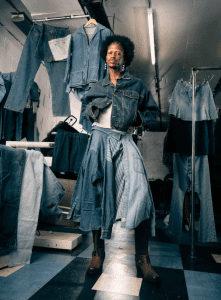
These shifts reinforced secondhand’s position as a commercially viable and brand-enhancing strategy.
5. What 2025 Taught the Industry
Three key takeaways defined the year:
- Policy is accelerating, and professional reuse infrastructure matters more than ever
- Quality, traceability, and compliance now define competitive advantage
- Collaboration across brands, wholesalers, and recyclers is essential for scale
Looking Ahead
As 2026 approaches, the used clothing industry stands at a critical intersection of regulation, innovation, and responsibility. Those who invest in transparency, partnerships, and circular systems will be best positioned to lead.
Because the future of fashion isn’t just new —it’s already in circulation.